
← Back to catalog
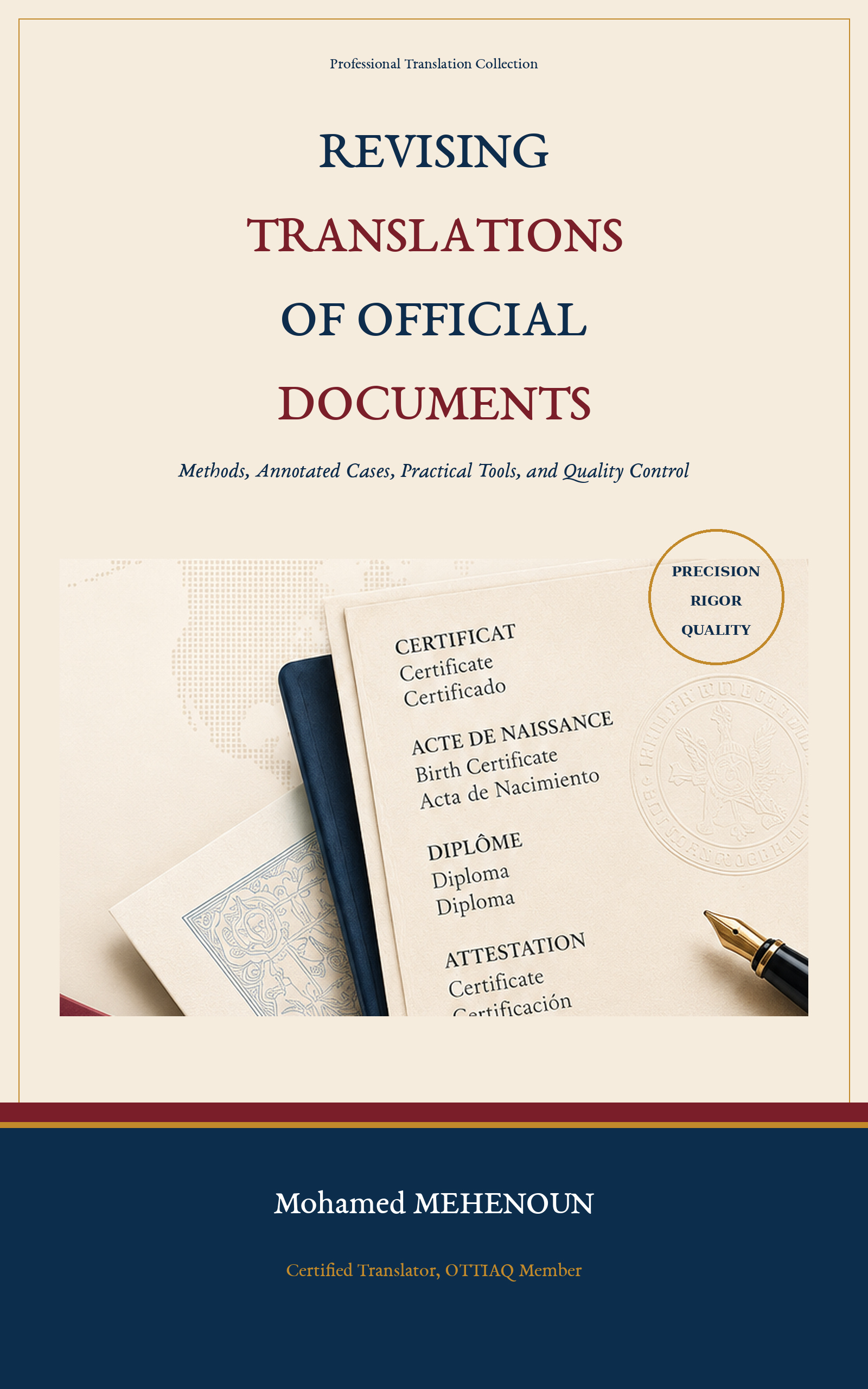
Revising Translations of Official Documents
Methods, Annotated Cases, Practical Tools, and Quality Control
Official-document translation leaves very little room for approximation. A mistranslated date, title, legal status, academic credential, restriction, or handwritten note can change the meaning of a document and affect the person who relies on it. This professional handbook presents a structured method for revising tra
Also available in
Retail buttons may lead to a title search when a direct product link has not yet been registered.
About this book
Revising Translations of Official Documents
Official-document translation leaves very little room for approximation. A mistranslated date, title, legal status, academic credential, restriction, or handwritten note can change the meaning of a document and affect the person who relies on it.
This professional handbook presents a structured method for revising translations intended for administrative, legal, academic, professional, and institutional use. It explains how to distinguish documentary accuracy from stylistic preference, identify high-risk errors, verify names, dates and figures, research institutional terminology, handle seals and signatures, revise another translator’s work without over-editing, and document difficult decisions.
Annotated cases, corrected exercises, practical checklists, model reporting language, and a ten-step operating procedure turn the principles into a repeatable workflow.
Written for translators, revisers, translation students, and language professionals, the book focuses on one central objective: preserving essential information across languages without unjustified additions, omissions, or institutional equivalences.
This is an independent publication. When it discusses regulation, immigration, citizenship or official procedures, current official sources prevail.
You may also like
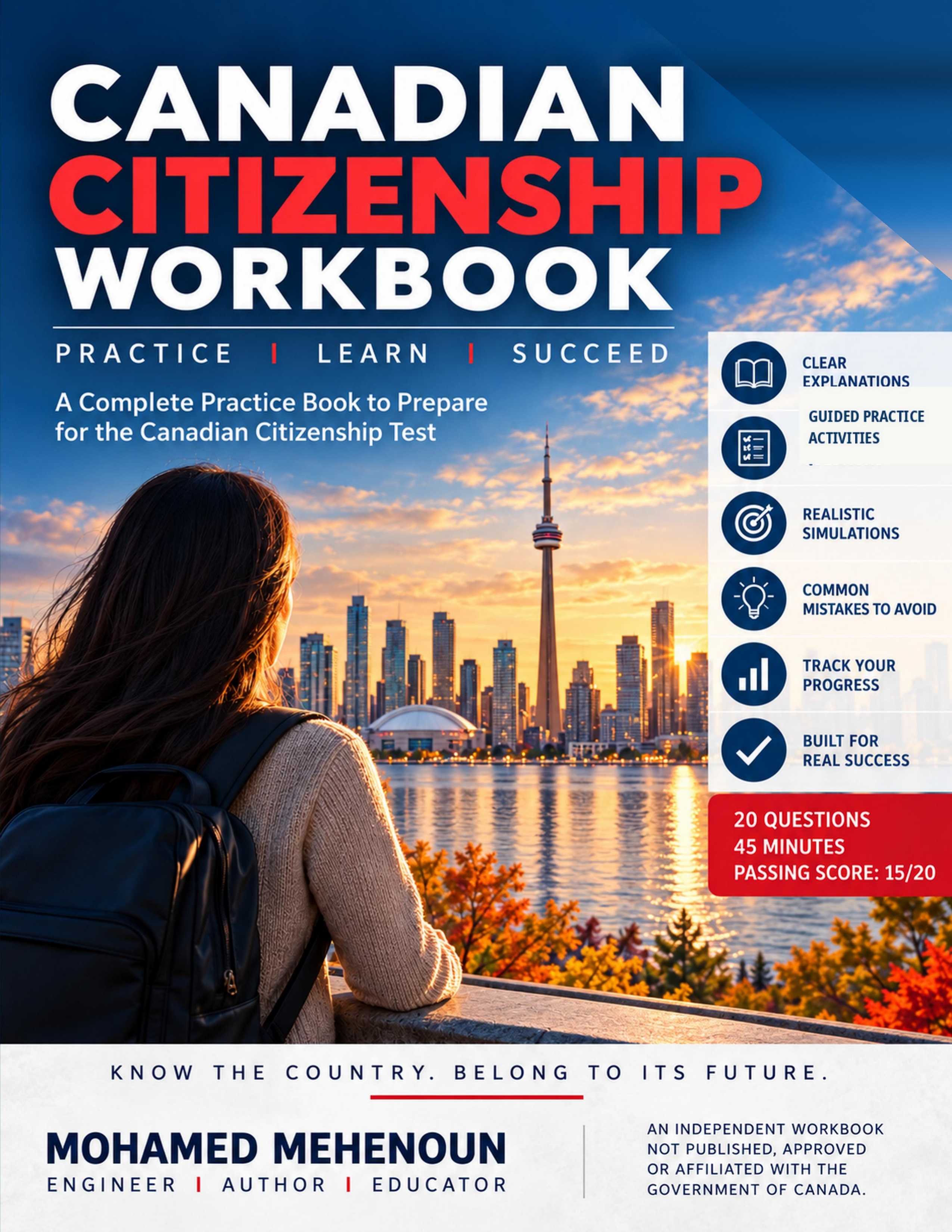
Canadian Citizenship Workbook
A Complete Practice Book to Prepare for the Canadian Citizenship Test
View book